

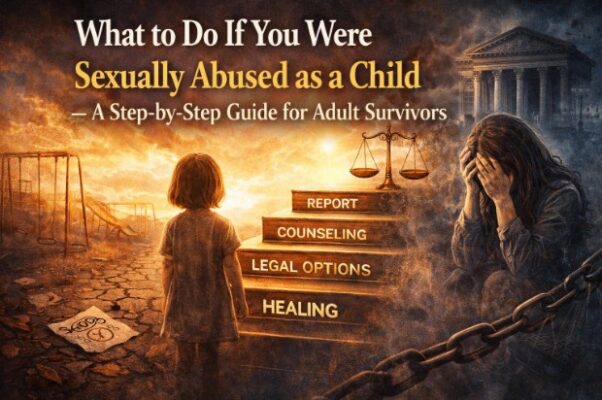
Adult survivors of childhood sexual abuse can take legal action, seek therapy, preserve evidence, and report to law enforcement or institutions — at any point, in any order, with no single step obligating any outcome they are not ready for.
A civil lawsuit in Illinois or Wisconsin requires no police report, no criminal conviction, and no upfront legal fees.
Anna O’Connor has seen it firsthand across 50+ jury trials: most clients arrive mid-step — unsure where they are in the process and uncertain about what comes next. This guide meets survivors wherever they are.
The Wisconsin sexual abuse lawyers at Third Coast Lawyers represent adult survivors of childhood sexual abuse across Illinois and Wisconsin — and every engagement begins with a confidential, no-obligation consultation.
Third Coast Lawyers offers confidential consultations for childhood sexual abuse survivors in Illinois and Wisconsin — no upfront cost. Reach out today.
Reaching this point took something. Whatever brought you here — a memory, a conversation, a moment of clarity, or simply exhaustion from carrying this alone — that step matters.
The steps in this guide are options, not obligations. The survivor controls every decision that follows. Some survivors begin with therapy. Some begin with a legal consultation. Some begin by telling one person they trust.
All of those are valid starting points in Illinois, Wisconsin, and every other jurisdiction — and none of them lock the survivor into anything that follows.
There is no wrong place to start. What matters is that you are here.
If the abuser still has access to the survivor or to children in their care, safety comes before any other step in this guide.
According to the CDC’s Adverse Childhood Experiences data, 1 in 4 girls and 1 in 13 boys in the United States experience sexual abuse during childhood — and in many of those cases, the abuser remains in the survivor’s life or community long after the abuse ends. Local law enforcement, child protective services, and crisis hotlines are all available in 2026 — and none of them require the survivor to have their legal situation resolved before making contact.
The RAINN National Sexual Assault Hotline (1-800-656-4673) connects survivors to local support 24 hours a day. TheCrisis Text Line (text HOME to 741741) provides immediate text-based support.
The Childhelp National Child Abuse Hotline (1-800-422-4453) handles reports involving children currently at risk.
If there is any ongoing risk — to the survivor or to others — that concern takes precedence over everything else in this guide.
Revisiting abuse — even in a clinical or legal context — is destabilizing for many survivors. That reality is not a reason not to proceed. It is a reason to proceed with support.
Identifying one trusted person — a friend, family member, or therapist — who can serve as an anchor during this process makes every subsequent step more manageable.
Therapy is not a prerequisite for legal action in Illinois or Wisconsin. Many survivors consult an attorney and begin civil proceedings before entering therapy, or simultaneously.
Having mental health support during a legal process makes a meaningful practical difference — and the Wisconsin sexual abuse attorneys at Third Coast Lawyers can speak to how therapy and civil litigation intersect from a practical standpoint, so survivors understand both tracks before committing to either.
Taking next steps is easier — and safer — when the survivor is not doing it alone.
Therapy is not a detour from action. Therapy is parallel support — a resource that strengthens the survivor’s capacity to navigate legal processes, evidence conversations, institutional confrontations, and the psychological demands of civil litigation in Illinois and Wisconsin courts as of 2026.
One practical legal consideration applies early: in some cases, therapy records are subject to discovery in civil litigation.
This is not a reason to avoid therapy. It is a reason to mention a potential lawsuit to a therapist at the outset — so the therapist documents sessions in a way that is both clinically appropriate and litigation-aware.
Anna Gonis O’Connor and the team at Third Coast Lawyers advise clients directly on how therapy records intersect with civil proceedings, because this question arises in nearly every active case.
Survivors seeking a trauma-informed therapist with experience in sexual abuse can search the Psychology Today therapist finder by specialty and location.
RAINN’s counseling locator connects survivors to local sexual assault service providers, many of which offer trauma-informed therapy at reduced or no cost.
Therapy supports both healing and the practical demands of a legal process — and a trauma-informed therapist helps survivors navigate both.
If you’re ready to get started, call us now!
Many survivors assume that because years have passed, nothing remains. That assumption is incorrect more often than survivors expect.
Evidence in childhood sexual abuse cases is older and harder to locate than in recent-incident cases — but it exists, and an attorney identifies what may still be recoverable so survivors make decisions based on what actually exists rather than what they fear is gone.
| Evidence Type | What to Look For |
| Medical records | Childhood physical exams, ER visits, or behavioral health referrals during or after the abuse period |
| School records | Behavioral changes, attendance patterns, academic decline, or disclosures to teachers or counselors |
| Communications | Letters, emails, texts, or social media exchanges with the abuser or with people the survivor told at the time |
| Journals or diaries | Personal records kept during or after the abuse — courts have admitted these as contemporaneous evidence |
| Witness accounts | People who were told about the abuse at the time, who observed warning signs, or who have since come forward independently |
| Institutional records | Personnel files, internal complaints, disciplinary records, and prior investigation files — especially relevant for clergy, school, and organizational abuse |
The Childhelp National Child Abuse Hotline and RAINN both provide guidance on evidence preservation for survivors considering legal action in 2026.
The most important practical instruction: do not destroy anything, even if its relevance seems unclear. An attorney at Third Coast Lawyers makes that determination — not the survivor.
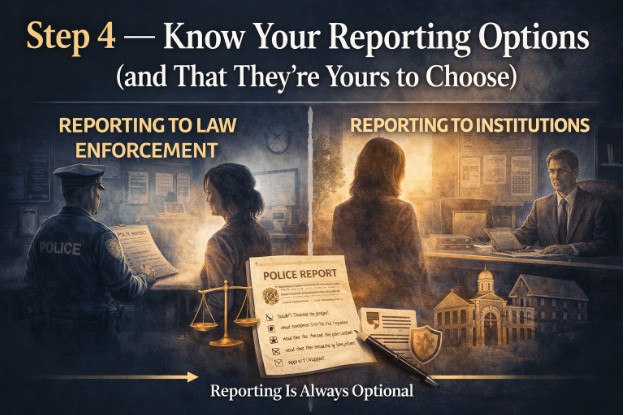
Adult survivors can report childhood abuse to Illinois or Wisconsin law enforcement at any time. No deadline governs when a survivor may file a police report — even when criminal prosecution is now time-barred under the applicable statute of limitations.
A report creates an official record, may prompt a law enforcement investigation, and can contribute to protecting others who face current risk from the same abuser.
What reporting may not accomplish is equally important to understand. The U.S. Department of Justice confirms that prosecution decisions rest entirely with the state, not the survivor.
The prosecutor decides whether to charge, negotiate, or take the case to trial. The survivor is a witness in that process, not a party.
Reporting to law enforcement is always an option — but it is never a requirement for pursuing civil justice in Illinois or Wisconsin, and no survivor should feel obligated to relive their experience through a criminal process they do not want.
Survivors can report directly to the institution where the abuse occurred — a school, church, sports organization, or employer — independent of law enforcement and independent of civil litigation.
Institutions in Illinois and Wisconsin are required under mandatory reporter laws to report to authorities once notified, so an institutional report can trigger obligations the institution cannot ignore.
The important limitation: institutional self-reporting is frequently inadequate and self-protective. An institution’s internal response prioritizes its own interests — not the survivor’s.
The wrongful death attorneys and sexual abuse lawyers at Third Coast Lawyers handle cases where institutions managed abuse internally rather than reporting it, extending harm to additional survivors as a direct result.
Reporting to an institution creates a record and triggers mandatory reporting obligations — but institutional responses require independent attorney oversight to produce real accountability.
A legal consultation is a conversation — not a commitment to file. Speaking with an attorney means understanding what options exist, what deadlines apply under current Illinois and Wisconsin law, and what the process would look like if the survivor decides to proceed — so every subsequent decision comes from an informed position rather than an assumption.
A consultation with the Wisconsin sexual abuse attorneys at Third Coast Lawyers covers the full range of civil sexual abuse practice areas available to survivors, including:
Statute of limitations status — whether the filing window is open under 2026 Illinois or Wisconsin law, and whether any exception, extension, or lookback window applies to the specific facts.
Liable parties — whether the individual abuser, an institution, or both can be named as defendants, and what each theory of liability requires to establish.
Evidence assessment — what evidence may still exist, where it may be located, and what a civil investigation would realistically uncover.
Damages — what categories of financial compensation a civil case might seek, including medical costs, therapy, lost income, pain and suffering, and punitive damages where applicable.
Process and timeline — what civil litigation looks like from filing through resolution in Illinois and Wisconsin courts, how long it typically takes, and what the survivor’s involvement would be at each stage.
Most civil sex abuse attorneys — including the team at Third Coast Lawyers — work on a contingency fee basis, meaning the survivor pays no upfront costs and legal fees are collected only if the case results in a recovery, so access to civil representation does not depend on the survivor’s financial resources.
Timing matters even for survivors who are not yet ready to file. Speaking with an attorney in 2026 preserves options.
Waiting can close them permanently — because legal deadlines run whether or not the survivor is tracking them.
Not sure where your legal options stand? Third Coast Lawyers assesses civil sex abuse claims across Wisconsin and Illinois. Schedule a confidential consultation.
If you’re ready to get started, call us now!
Survivors should not post about their case, their abuser, or the legal process on social media — including private groups, closed forums, or direct messages on platforms that retain data.
Public and semi-public statements can complicate civil litigation in ways that are difficult to undo before Illinois or Wisconsin courts.
An attorney advises on what is safe to share and when — and that guidance should precede any public disclosure, including to journalists or advocacy organizations.
Survivors should keep a private, dated record of anything that feels relevant going forward — memories that surface, conversations with witnesses, any contact initiated by the abuser or by representatives of an institution.
Even informal handwritten notes with dates serve a purpose in civil litigation. The American Bar Association’s civil litigation resources confirm that documentation created close in time to relevant events carries greater evidentiary weight than later reconstructions — so notes made in 2026 about a conversation that happened in 2026 are more valuable than notes made in 2028 about that same conversation.
There is no pace requirement. Some survivors consult an attorney and file within months. Others take years to feel ready. Both paths are valid, and the Wisconsin sexual abuse lawyers at Third Coast Lawyers follow the survivor’s lead at every stage. The only practical caution: legal deadlines are real and do not pause for readiness.
An attorney tells the survivor precisely how much time remains under current Illinois and Wisconsin law — so the survivor’s timeline is an informed choice, not an accidental one.
Survivors set the pace. Knowing the legal deadlines ensures that pace does not inadvertently close a door.
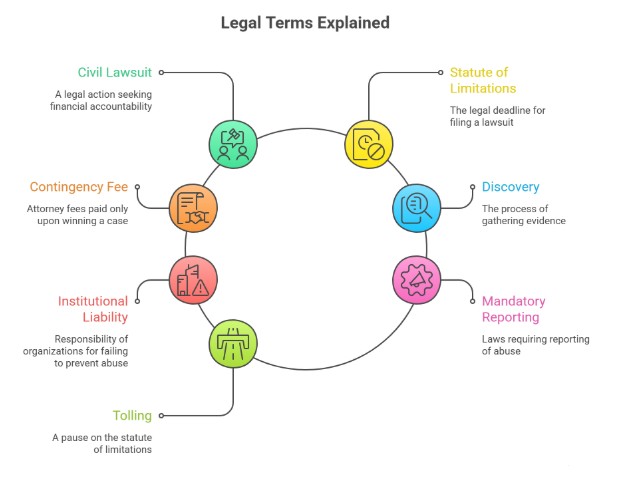
| Term | Plain-Language Definition |
| Civil lawsuit | A legal action filed by the survivor seeking financial accountability — separate from any criminal process |
| Statute of limitations | The legal deadline for filing a lawsuit varies by state and often has exceptions for childhood abuse |
| Contingency fee | A fee arrangement where the attorney is paid only if the case is won or settled — no upfront cost to the survivor |
| Discovery | The legal process by which both sides gather evidence,i ncluding, in some cases, medical or therapy records |
| Institutional liability | Legal responsibility held by an organization — a school, church, or employer — for failing to prevent or report abuse |
| Mandatory reporting | Laws requiring certain professionals and institutions to report known or suspected abuse to authorities |
| Tolling | A legal pause on the statute of limitations that may apply in childhood abuse cases |
These definitions reflect general legal principles applicable in Illinois and Wisconsin as of March 2026. A licensed attorney can explain how each applies to a specific situation and jurisdiction.
Can I take legal action against someone who abused me as a child, even if it happened decades ago?
Many states have extended or eliminated civil statutes of limitations for childhood sexual abuse, so lookback windows have reopened claims previously considered time-barred. An attorney determines what is possible in a specific state and fact pattern during the initial consultation.
Do I have to report to the police before consulting a civil attorney?
No, a police report is not required to pursue civil litigation in Illinois or Wisconsin. Survivors consult an attorney and explore civil options entirely independently of the criminal process, so both decisions remain separate choices the survivor controls.
What if I don’t have any evidence — can I still pursue a civil case?
Evidence exists in places survivors do not expect — medical records, school files, and institutional documents may still be recoverable. Many civil cases rely on survivor testimony and expert witnesses, so physical evidence is not a prerequisite for a viable claim.
Will I have to confront my abuser in court?
Many civil sex abuse cases in Illinois and Wisconsin are resolved through settlement before any trial occurs. Attorneys work to protect survivors from unnecessary exposure throughout the process, and whether a case proceeds to trial depends on case-specific factors.
What if my abuser is a family member — does that change my options?
Civil claims can, in some cases,s be filed against family members in Illinois and Wisconsin, and familial complexity shapes how options are pursued rather than eliminating them. An attorney walks through the specific process and implications during the consultation.
How do I find a lawyer who handles childhood sexual abuse cases?
Personal injury attorneys with a specific practice area in sexual abuse litigation and a track record of representing survivors are the right fit. Third Coast Lawyers focuses specifically on civil abuse claims and is reachable through the firm’s contact page for a confidential consultation.
What if I’m not ready to file a lawsuit — should I still talk to an attorney?
Yes — a consultation provides accurate information about deadlines and options without any obligation to proceed. Knowing where the survivor stands legally costs nothing and preserves choices that delay might permanently eliminate.
Finding this article, reading this far, considering these steps — that is not nothing. That is the beginning. Whatever brought you here, it took something to arrive, and that something matters.
The steps in this guide are options. The pace belongs entirely to you. Third Coast Lawyers does not exist to pressure survivors into decisions they are not ready for — the firm exists to make sure survivors know what their decisions actually are.
Anna Gonis O’Connor, founding and managing partner at Third Coast Lawyers, brings over 20 years of civil litigation experience, more than 50 jury trials, and recognition as a Cook County accredited arbitrator to every case the firm handles.
She and the Third Coast Lawyers team have walked alongside survivors of childhood sexual abuse through every stage of this process — from the first conversation through resolution — across Illinois and Wisconsin courts.
Every consultation is confidential. Survivors are never obligated to share more than they are ready to share. The firm’s role in that first conversation is to listen, to inform, and to follow the survivor’s lead.
Learn more about Wisconsin sexual abuse claims, wrongful death litigation, and institutional negligence cases — and what Third Coast Lawyers pursues on behalf of survivors across both states.
Third Coast Lawyers represents childhood sexual abuse survivors across Wisconsin and Illinois on a contingency basis, with no upfront fees. Schedule your confidential consultation today.

About the Author
Managing Partner · Toxic Tort Trial Attorney · Licensed in Wisconsin, Illinois, and Missouri
Anna G. O'Connor is the founding member and managing partner of Third Coast Lawyers and a trial attorney licensed in Wisconsin, Illinois, and Missouri. She practices across the Midwest and has tried more than 50 jury trials during her 20-plus-year legal career. Anna represents workers and families in toxic tort matters, including asbestos and mesothelioma claims, in Wisconsin, Illinois, and Missouri state courts, federal courts, and multi-district litigation proceedings.
