

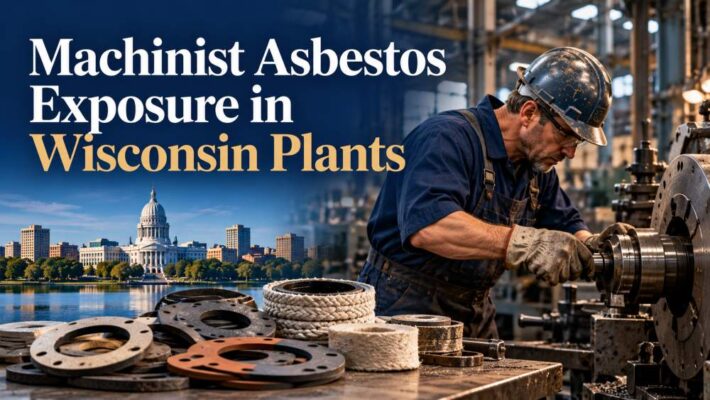
Machinist asbestos exposure occurs when asbestos fibers are released during routine machine maintenance, such as cutting and scraping gaskets, pulling valve packing, and servicing brake and clutch facings on plant equipment.
Not every gasket or brake part contained asbestos, but many older ones did, and the route differs from the insulation work most asbestos claims describe.
Third Coast Lawyers, licensed to practice in Wisconsin, Illinois, and Missouri, handles these claims through its toxic injury practice.
A diagnosis after years of machine work raises questions about which parts were involved. Third Coast Lawyers reviews Wisconsin machinist work histories in a free consultation. No fee unless there is a recovery.
Wisconsin machinists could be exposed to asbestos through the parts they removed and replaced: gaskets on flanges and pumps, packing in valves and shafts, and friction linings in brakes and clutches. When those parts contained asbestos, each repair broke old material apart at the bench or on the plant floor.
The work was repetitive. A machinist on a maintenance crew could open the same pump housing, scrape the same flange face, and blow out the same brake assembly many times over a career.
The National Cancer Institute states that no safe level of asbestos exposure has been identified. That is a health finding; a legal claim still has to prove that a specific exposure caused a specific disease.
Machinists also worked beside other trades. Insulators stripping pipe covering and boiler crews resealing steam lines often shared the same floor, which could add ambient exposure on top of direct parts work.
Exposure and disease are separate questions. A history of asbestos work does not mean a person is ill. A claim begins with a physician’s diagnosis of a disease the NCI associates with asbestos, such as mesothelioma, lung cancer, or asbestosis.
Gaskets, sheet and rope packing, and brake and clutch friction materials were commonly made with asbestos for decades because the fiber resisted heat, pressure, and wear.
Whether a particular part contained asbestos depends on its maker and production years.
| Component | Where Machinists Found It | Work That Disturbed It |
| Sheet and spiral-wound gaskets | Pump housings, flanges, compressors, engine heads | Scraping or wire-brushing old gasket off the flange face |
| Rope and braided packing | Valve stems, pump shafts, hydraulic rams | Pulling worn packing with hooks and cutting new rings to size |
| Brake linings and pads | Cranes, hoists, presses, plant vehicles | Grinding linings and blowing out drums with compressed air |
| Clutch facings | Presses, drive trains, heavy machinery | Removing and resurfacing worn facings |
The EPA’s brake and clutch guidance notes that some, but not all, friction parts contain asbestos, and that the content cannot be confirmed by sight.
That uncertainty is why product records matter in machinist cases, as in other Wisconsin asbestos exposure claims.
Gasket and packing removal can release fibers because old material often sticks to metal after years of heat and pressure. Removing it then means scraping, grinding, or brushing, and breaking asbestos-containing material apart frees the fibers bound inside it.
Present-day federal rules treat this work as hazardous, though the rules differ by setting:
These are current obligations. Many Wisconsin machinists did this work decades before such controls existed.
Shop practice then included dry scraping, power wire brushing, blowing out brake drums with compressed air, and cutting new gaskets from sheet stock at the bench. Those habits could put fibers in the breathing zone and onto work clothes.
Plant records thin out as companies close and merge. Third Coast Lawyers rebuilds Wisconsin plant work histories before evidence disappears. No fee unless there is a recovery.
If you’re ready to get started, call us now!
Wisconsin’s heavy-equipment, engine, and gear makers employed machinists to build and maintain their equipment, with many plants in the Milwaukee metro area. Plants in West Allis, South Milwaukee, West Milwaukee, Franklin, and Wauwatosa built mining shovels, cranes, industrial gears, and small engines.
Machinists in Fox Valley paper mills and statewide foundries did similar pump, valve, and press work. Great Lakes shipyards in Manitowoc, Sturgeon Bay, Superior, and Marinette also employed machinists on engine-room equipment.
Working at one of these sites alone does not establish exposure. The evidence has to show that asbestos-containing parts were present in the machinist’s own work. Milwaukee-area plants appear on the firm’s list of Wisconsin asbestos jobsites, alongside power plants, foundries, and mills.
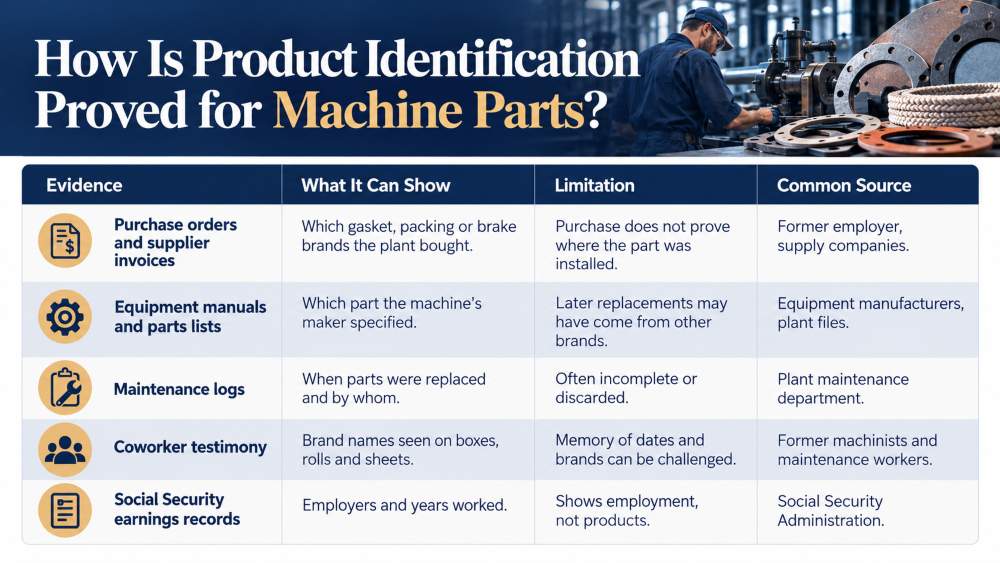
Product identification for machine parts means tying a specific brand of gasket, packing, or friction material to the machinist’s plant during the years the machinist worked there. Installed parts rarely show markings, so the evidence usually comes from records and witnesses.
| Evidence | What It Can Show | Limitation | Common Source |
| Purchase orders and supplier invoices | Which gasket, packing, or brake brands the plant bought | Purchase does not prove where the part was installed | Former employer, supply companies |
| Equipment manuals and parts lists | Which part the machine’s maker specified | Later replacements may have come from other brands | Equipment manufacturers, plant files |
| Maintenance logs | When parts were replaced and by whom | Often incomplete or discarded | Plant maintenance department |
| Coworker testimony | Brand names seen on boxes, rolls, and sheets | Memory of dates and brands can be challenged | Former machinists and maintenance workers |
| Social Security earnings records | Employers and years worked | Shows employment, not products | Social Security Administration |
Original specifications and later replacements often differ. A pump may have shipped with one maker’s gasket, then received another brand at each overhaul as the plant changed suppliers. A parts list identifies the starting point but not every installed product.
Each source answers part of the question, which is why they are used together for proving asbestos exposure at plants that closed or changed owners.
Product identification is only one element. A claim also needs a medical diagnosis and expert causation testimony, and whether the combined evidence is enough depends on the facts and Wisconsin law.
Third Coast Lawyers documents the exposure timeline from day one because, in the firm’s experience, gaps in that timeline are the most common reason claims fail at the causation stage.
A first consultation with Third Coast Lawyers includes a free review of the diagnosis, work history, and deadline questions.
Clients work directly with O’Connor and the firm’s team, and home and hospital appointments are available. A machinist or family can bring the records already in their own hands:
The firm requests employer files, purchase records, and parts lists through the legal process rather than gathering them informally. After the meeting, the firm maps the responsible parties and the records still needed.
Wisconsin’s general limit for personal injury claims is 3 years under Wis. Stat. § 893.54(1m), and Wisconsin courts apply a discovery rule that can affect when that period begins.
Work histories that cross state lines can raise questions about which state’s deadline applies, so the mesothelioma filing deadline is checked against each claimant’s diagnosis date and work record.
Gasket work may help support a claim when evidence ties a specific manufacturer’s asbestos gasket to the machinist’s plant. A claim also needs a diagnosed asbestos-related disease and expert causation testimony, and whether the evidence is sufficient depends on the facts and Wisconsin law.
Manufacturers may be identified through purchase orders, supplier invoices, equipment parts lists, maintenance logs, and coworker memory of brand names. Each source has limits, so investigators use them together. Social Security earnings records confirm the employers and years that frame the search.
Possibly. Small job shops and repair businesses also used gaskets, packing, and brake parts. Whether a claim exists depends on evidence placing a specific asbestos product in the machinist’s work, a diagnosed asbestos-related disease, and expert causation testimony under Wisconsin law.
Shipyard work can add another exposure setting to a machinist’s history. Machinists in Wisconsin shipyards serviced engine-room pumps, valves, and machinery while other trades worked nearby, so the evidence may cover both direct parts work and ambient dust on the same vessel.
A machinist’s history can include several employers and products from several manufacturers. Depending on the evidence, a lawsuit may name more than one manufacturer, and separate trust claims may be possible where a manufacturer reorganized in bankruptcy, subject to each trust’s eligibility criteria.
It could. Plant cranes, hoists, presses, and vehicles used brake and clutch friction materials, and some of those materials contained asbestos. The EPA warns that friction parts cannot be identified as asbestos-containing by sight, so purchase and parts records become important evidence.
Two different claims may apply. A family member who developed an asbestos-related disease from dust carried home may have a separate claim, depending on the facts and Wisconsin law. After a machinist dies, the estate or eligible family members may bring a wrongful death action.
Generally not against outside companies. Wis. Stat. § 102.03(2) makes workers’ compensation the exclusive remedy against the employer, but that exclusivity applies to the employer. Claims against outside product manufacturers may still be possible, depending on the defendants, the evidence, and the legal theory.
Wisconsin machinists could encounter asbestos through gaskets, packing, and friction parts rather than insulation, with dust released by scraping, brushing, and blowing out worn components.
A claim combines product evidence, a medical diagnosis, and expert causation testimony, and its deadline depends on the diagnosis and the states involved.
Old plant records get harder to find every year. Third Coast Lawyers handles Wisconsin machinist claims from intake to resolution. No fee unless there is a recovery.

About the Author
Managing Partner · Toxic Tort Trial Attorney · Licensed in Wisconsin, Illinois, and Missouri
Anna G. O'Connor is the founding member and managing partner of Third Coast Lawyers and a trial attorney licensed in Wisconsin, Illinois, and Missouri. She practices across the Midwest and has tried more than 50 jury trials during her 20-plus-year legal career. Anna represents workers and families in toxic tort matters, including asbestos and mesothelioma claims, in Wisconsin, Illinois, and Missouri state courts, federal courts, and multi-district litigation proceedings.
